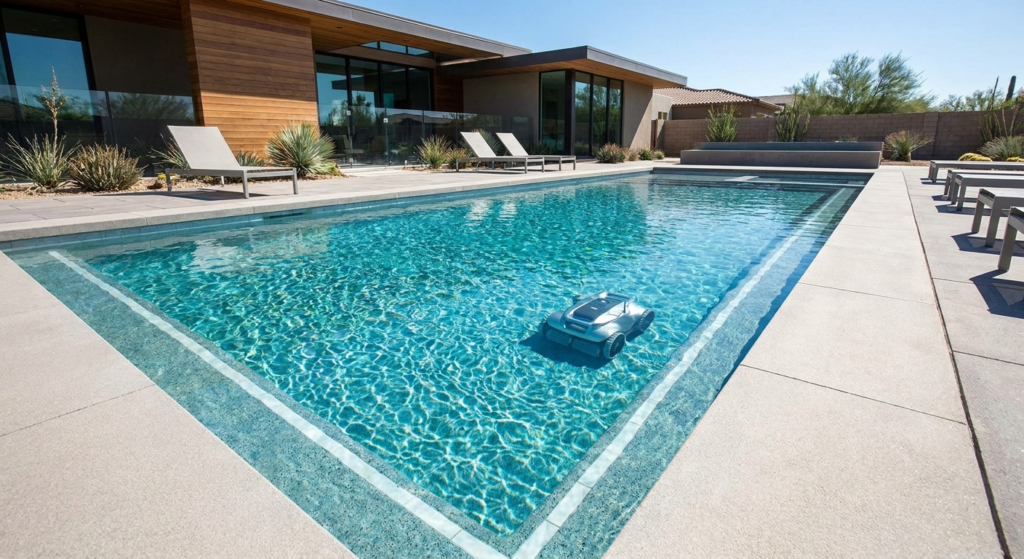

Owning a swimming pool offers endless summer fun, but the ongoing financial commitment often surprises new homeowners.
Understanding the full scope of maintenance expenses is crucial for anyone considering a pool installation or struggling with their current budget.
The typical homeowner spends between $1,200 and $4,000 annually to keep their pool clean, safe, and operational.
This article provides a factual breakdown of what drives these costs, whether you choose to manage the work yourself or hire a professional service. We will cover chemical costs, equipment replacement, utility bills, and hidden fees that many owners overlook.
Key Factors Influencing Pool Maintenance Costs
The size and material of your pool are the primary cost drivers. Larger pools require more chemicals, more water, and longer filtration times. A standard 15,000 to 20,000-gallon inground pool represents the average baseline for most cost estimates.
Pool material significantly impacts the bottom line.
Fiberglass pools have a smooth, non-porous gel coat that resists algae, typically requiring 30% fewer chemicals than concrete.
Concrete pools, while durable, are porous and demand frequent brushing and higher chemical dosages, making them the most expensive to maintain.
Vinyl liner pools fall somewhere in the middle but require liner replacement every 7 to 12 years, a cost of $1,500 to $4,500.
Your local climate also plays a major role. Pools in year-round warm climates like Florida or Arizona require 12 months of maintenance and face increased algae growth. Seasonal pools in the Northeast incur significant opening and closing costs but lower overall chemical usage.
DIY vs. Professional Management
Deciding whether to handle maintenance yourself or hire a professional is the biggest financial decision you will make as a pool owner. DIY maintenance requires a commitment of 2 to 4 hours per week during the swimming season.
Here is a typical monthly cost comparison during peak season:
- DIY Maintenance: $80 to $150 per month. This covers chemicals, cleaning supplies, and testing kits but excludes labor and major repairs.
- Professional Chemical Service: $100 to $175 per month. A technician handles water testing and chemical balancing.
- Full Professional Service: $150 to $350 per month. This includes chemical management, skimming, brushing, vacuuming, and filter cleaning.
Over a full year, DIY maintenance can save you between $1,000 and $4,000 compared to full professional service. Many owners find a hybrid approach works best, handling weekly chemistry and cleaning themselves while hiring a professional for seasonal opening, closing, and complex repairs.
Many owners find a hybrid approach works best, handling weekly chemistry and cleaning themselves while hiring a professional for seasonal opening, closing, and complex repairs.
The level of service you choose should align with your budget, technical comfort, and available time. Regardless of your choice, understanding the underlying costs of each component will help you manage your expenses effectively.
A Detailed Look at Recurring Expenses
Chemical Costs
Chemicals represent the most predictable recurring expense.
The average pool owner spends between $325 and $850 annually on chemicals.
This includes chlorine, pH adjusters, alkalinity increasers, algaecides, and shock treatments.
Buying chemicals in bulk at the start of the season can save 15 to 25 percent.
Equipment Replacement and Repairs
Pool equipment has a finite lifespan and requires eventual replacement.
A pool pump lasts 8 to 12 years and costs $400 to $1,200.
A gas heater costs $1,500 to $4,000 and lasts a similar duration.
Financial experts recommend setting aside $500 to $1,000 per year in an equipment reserve fund to absorb these inevitable costs without financial strain.
Utility Costs
Your pool pump is often the second-largest energy consumer in your home, after your HVAC system.
A standard single-speed pump running 8 hours daily can add $50 to $100 to your monthly electric bill.
Upgrading to a variable-speed pump can reduce this cost by 60 to 80 percent, paying for itself within 2 to 3 years.
Hidden and Seasonal Costs
New pool owners are often caught off guard by seasonal expenses and indirect costs.
Professional pool opening in the spring runs $350 to $500, while winterization costs $300 to $650.
A full drain and clean can cost $500 to $700, and an acid wash to remove mineral buildup ranges from $350 to $550.
Water evaporation is a constant expense. Pools lose 1 to 2 inches of water per week, adding $30 to $100 to your annual water bill. Additionally, owning a pool typically increases homeowner’s insurance premiums by $50 to $100 per year due to increased liability risks.
Understanding the full scope of your pool maintenance cost helps in creating a realistic annual budget that accounts for these often-overlooked expenses. Factoring in everything from chemicals to equipment depreciation ensures you are financially prepared for the responsibility of pool ownership.
Practical Strategies for Reducing Costs
Controlling pool expenses is largely about prevention and efficient operation. Maintaining consistent water chemistry is the single most effective way to avoid expensive problems. A neglected pool that turns green requires $200 to $500 in shock treatment and algaecide to recover.
Investing in a variable-speed pump and a solar cover provides the highest return on investment.
The pump drastically cuts electricity consumption, while the cover reduces water evaporation, retains heat, and reduces chemical loss.
These two upgrades can save the average pool owner $400 to $800 per year.
For specific chemical needs, using liquid chlorine instead of tablets can prevent the buildup of cyanuric acid that eventually requires a partial drain.
Testing your water two to three times per week with a reliable kit, rather than guessing, prevents over-dosing and saves money on chemicals over the long term.
By adopting a proactive maintenance schedule and making smart equipment choices, you can significantly reduce the total cost of owning a pool. A well-cared-for pool not only provides enjoyment but also protects the value of your home and prevents costly emergency repairs.