
Introduction
There’s something stubborn about kotora melnkalne. It doesn’t try to impress you in the loud, obvious ways most destinations do. No neon distractions, no forced experiences. You walk in expecting a picturesque coastal town, and within minutes you realize the place is operating on its own terms. That’s exactly why it works.
The kind of place that earns your attention slowly
kotora melnkalne doesn’t reveal itself all at once. The first impression is almost too quiet—stone streets, aging walls, a calm bay sitting under steep mountains. It feels contained, even a bit restrained. But give it an hour, and that restraint starts to feel intentional.
The layout forces you to slow down. There’s no efficient way to “cover” kotora melnkalne quickly, and that’s the point. You turn corners without knowing where they lead, pass small squares that feel like they haven’t changed in decades, and notice details you’d miss in a faster city.
What stands out most is how cohesive everything feels. Nothing sticks out awkwardly. The buildings, the streets, even the silence—it all fits together.
Why the old town still holds real weight
The old town in kotora melnkalne isn’t just preserved—it’s lived in. That difference matters.
Too many historic areas feel like open-air museums. Clean, polished, and slightly fake. kotora melnkalne avoids that trap. Laundry still hangs between buildings. Locals still move through the same narrow alleys tourists photograph. The place isn’t frozen in time; it’s continuing in it.
The architecture reflects layers of influence, especially from long periods of Venetian control. You see it in the symmetry of windows, the stonework, the small decorative details that don’t scream for attention but reward anyone paying attention.
And then there are the churches. Not overwhelming in number, but enough to remind you that kotora melnkalne has always been more than just a scenic stop. These structures anchor the town, both visually and culturally.
The climb that separates casual visitors from engaged ones
There’s a moment in kotora melnkalne where you either commit or you don’t. It happens at the base of the city walls.
The climb up toward the fortress isn’t easy. It’s long, uneven, and exposed. But skipping it means missing the most honest perspective on kotora melnkalne.
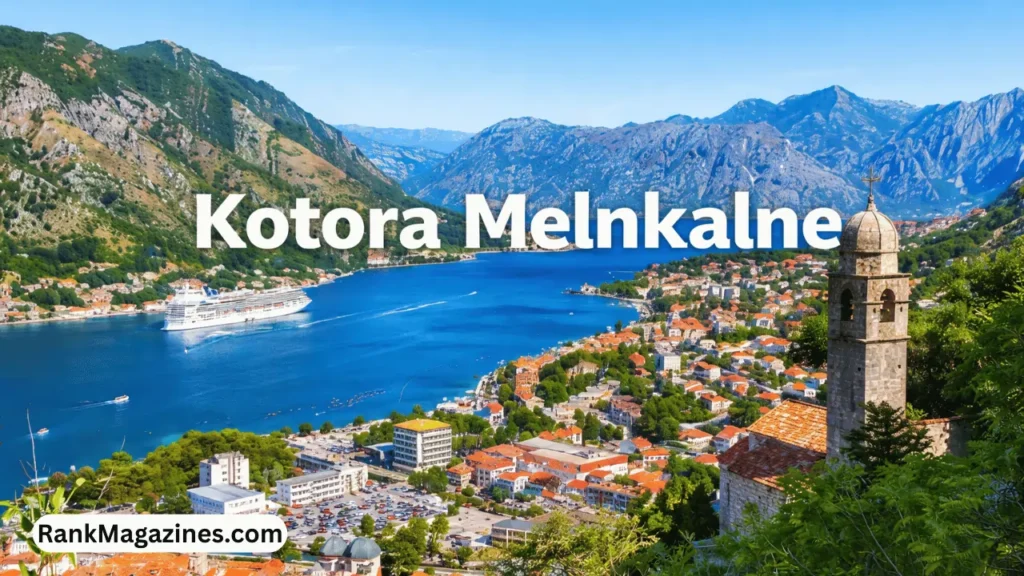
From above, everything makes sense. The tight layout of the old town, the curve of the bay, the way the mountains press in from all sides—it stops being just “beautiful” and starts feeling deliberate. Defensive, strategic, almost calculated.
People who rush through kotora melnkalne rarely make this climb. And it shows. Their experience stays surface-level.
The bay is not just a backdrop
It’s easy to treat the water around kotora melnkalne as scenery. That’s a mistake.
The bay shapes everything—the climate, the pace, even the light. Early mornings feel different here. The water is still, almost reflective in a way that exaggerates the mountains. Evenings shift the tone completely, with shadows stretching across the town and softening its edges.
Nearby settlements along the bay add another layer. Short trips out of kotora melnkalne reveal quieter corners, places that feel even less touched. It’s not about checking off locations. It’s about understanding the setting that gives kotora melnkalne its identity.
Tourism pressure is real, and it’s changing the experience
Let’s not pretend kotora melnkalne is untouched. It isn’t.
Cruise ships arrive, and with them come waves of visitors who move through the old town in tight clusters. For a few hours, the atmosphere shifts. Streets feel narrower, quieter corners disappear, and the rhythm breaks.
But here’s the important part: timing changes everything.
Early mornings and late evenings still belong to kotora melnkalne itself. That’s when the place resets. The crowds thin out, the noise drops, and the original character returns. If you experience kotora melnkalne only during peak hours, you’re not really experiencing it at all.
Food and local life don’t try to impress you
Dining in kotora melnkalne isn’t about spectacle. It’s about consistency.
You won’t find exaggerated presentations or menus designed for photos. What you get instead is straightforward coastal food—fresh seafood, simple preparation, and flavors that don’t need explaining.
The better places aren’t always the most visible ones. They’re tucked into corners, slightly removed from the main paths. You notice them by the way locals linger there, not by flashy signs.
That’s a pattern across kotora melnkalne. The most worthwhile experiences rarely advertise themselves.
The balance between history and daily life
One of the strongest aspects of kotora melnkalne is how it avoids turning into a caricature of itself.
Yes, it’s historic. Yes, it’s visually striking. But it doesn’t lean too hard into either identity. People still live here in a way that feels grounded. Shops cater to daily needs, not just visitors. Conversations happen in doorways, not just cafes.
That balance keeps kotora melnkalne from becoming hollow. It still feels like a place with a purpose beyond being seen.
What people get wrong about visiting
Most people approach kotora melnkalne with the wrong mindset. They treat it like a quick stop—something to walk through, photograph, and leave behind.
That approach strips away everything that makes it interesting.
kotora melnkalne isn’t about coverage. It’s about presence. Sitting in a square without checking your phone. Walking without a mapped route. Noticing how the light changes against the stone walls.
It rewards attention, not efficiency.
The role of geography in shaping the mood
The mountains around kotora melnkalne aren’t just dramatic—they’re defining.
They create a sense of enclosure that you don’t usually get in coastal towns. There’s no wide, open horizon. Everything feels held in place. That changes how you experience space.
It also affects movement. Roads wind rather than stretch. Views reveal themselves gradually instead of all at once. kotora melnkalne feels intentional in a way that flatter landscapes rarely achieve.
Why it stays with you longer than expected
You don’t leave kotora melnkalne thinking about one standout moment. There’s no single highlight that defines it.
Instead, it lingers in fragments.
A quiet street just before sunset. The sound of footsteps echoing off stone walls. The view from halfway up the fortress climb when you almost turn back but don’t.
Individually, these moments seem small. Together, they build something that sticks.
That’s the difference. kotora melnkalne doesn’t overwhelm you—it settles in gradually and refuses to leave.
Conclusion
kotora melnkalne isn’t trying to compete with louder destinations, and that’s exactly why it wins. It demands a slower pace, a bit of effort, and a willingness to pay attention. If you meet it halfway, it gives you something most places can’t—an experience that feels earned, not packaged.
Ignore the rush, stay longer than planned, and let kotora melnkalne unfold on its own terms. That’s when it actually works.
FAQs
1. How much time should I realistically spend in kotora melnkalne?
At least two days. Anything less turns it into a rushed walkthrough, which misses the point entirely.
2. Is the fortress climb in kotora melnkalne worth the effort?
Yes, but only if you’re willing to take it slow. Rushing up defeats the experience and the views don’t land the same way.
3. When does kotora melnkalne feel least crowded?
Early morning and late evening. Midday, especially when cruise visitors arrive, changes the atmosphere completely.
4. Are there quieter areas around kotora melnkalne worth visiting?
Yes, nearby small towns along the bay offer a calmer version of the same setting without the constant foot traffic.
5. What’s the biggest mistake visitors make in kotora melnkalne?
Trying to see everything quickly instead of slowing down and letting the place reveal itself naturally.
You May Also Read: Koriandri: Health Benefits, Uses and Practical Cooking Guide for Better Results