
Introduction
The way piragnia gets talked about is wildly disconnected from reality. It’s either painted as a mindless killing machine or reduced to a trivia fact about sharp teeth. Neither view holds up. What actually makes piragnia interesting is how practical, restrained, and surprisingly strategic it is in its environment. Strip away the drama, and you’re left with a creature that plays a precise role in a complex system—one that people consistently underestimate.
The environment shapes everything about piragnia
Piragnia doesn’t exist in isolation. It’s shaped by rivers that flood, shrink, and shift constantly. In places like the Amazon basin, water levels rise dramatically during rainy seasons, spreading fish across forests, then pulling them back into tighter channels when dry periods hit.
That cycle matters.
When food is plentiful, piragnia behaves differently than when water shrinks and competition spikes. During high-water periods, it feeds opportunistically and spreads out. When resources tighten, grouping becomes more noticeable—not because piragnia is plotting coordinated attacks, but because survival demands proximity to food sources.
People often misread this clustering as aggression. It’s not. It’s efficiency under pressure.
The teeth are real—but the story behind them is better
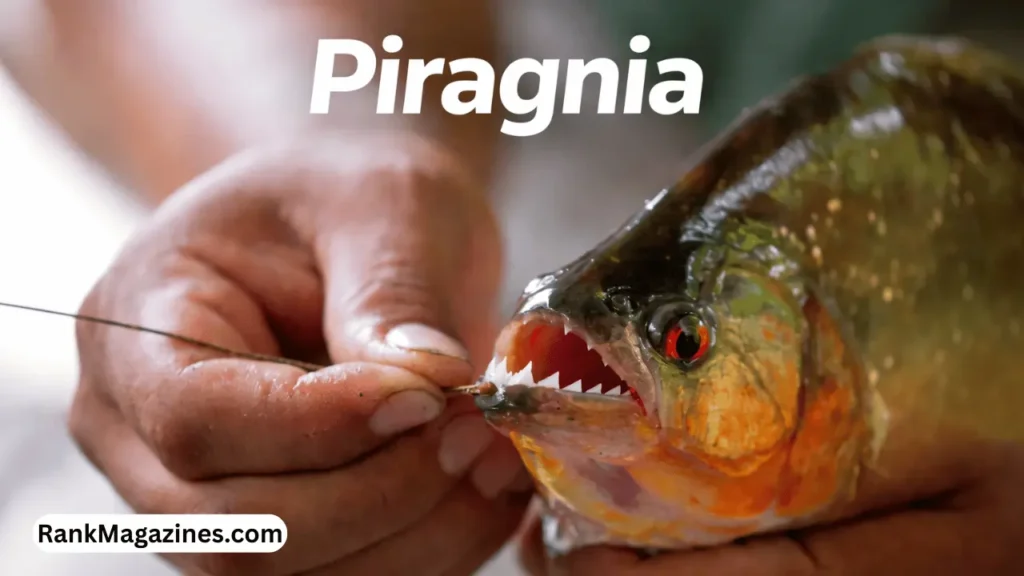
Yes, piragnia has sharp, triangular teeth. That part is not exaggerated. The bite is fast and clean, built for slicing rather than tearing.
But the obsession with teeth misses the point.
Those teeth aren’t designed for chaos. They’re designed for precision. Piragnia doesn’t waste energy. It targets what it can handle, takes what it needs, and moves on. In most cases, that means smaller fish, insects, or already weakened animals.
There’s a mechanical elegance to it. The jaw alignment allows for quick, decisive bites, not prolonged struggle. That efficiency is what keeps piragnia competitive in crowded ecosystems.
Why the “feeding frenzy” narrative refuses to die
The idea that piragnia instantly strips anything to bone is one of the most persistent myths out there. It survives because it’s dramatic, simple, and easy to visualize.
Reality is less cinematic.
For a true frenzy to happen, several conditions need to align: limited food, confined space, and heightened competition. Even then, the behavior is short-lived. It’s not the default state of piragnia—it’s a reaction to stress.
Most encounters between piragnia and larger animals don’t escalate at all. In fact, piragnia tends to avoid unnecessary confrontation. Injury is a bigger risk than hunger in many cases, and this species seems to understand that balance well.
Piragnia as an ecosystem cleaner
This is where piragnia becomes genuinely valuable.
It acts as a clean-up crew.
Dead or dying animals don’t linger for long in waters where piragnia is active. By consuming carrion, it helps prevent the spread of disease and keeps the aquatic environment stable. It’s not glamorous work, but it’s essential.
Without piragnia, those systems would clog up fast. Decomposition would slow, and water quality would drop. So while it’s often framed as destructive, piragnia is quietly maintaining balance behind the scenes.
Social behavior isn’t what people think
There’s a tendency to describe piragnia as either solitary killers or hyper-coordinated hunters. Neither description fits.
Piragnia is situationally social.
It forms groups when it makes sense—usually for protection or feeding efficiency—but those groups aren’t tightly organized units. There’s no hierarchy in the way people imagine. No leader directing movement. It’s more like a loose network of individuals responding to the same signals.
This flexible behavior is what allows piragnia to adapt quickly. It doesn’t rely on rigid patterns. It reacts.
The role of fear in shaping its reputation
Fear has done more to define piragnia than biology ever did.
Stories passed down, exaggerated encounters, and media portrayals have all pushed the same narrative: danger first, context later. That framing sticks, even when evidence contradicts it.
The result is a distorted image.
Piragnia becomes a symbol of uncontrolled aggression, when in reality it’s highly selective. It doesn’t attack randomly. It doesn’t waste effort. It doesn’t behave recklessly unless pushed into extreme conditions.
The fear says more about human storytelling than it does about piragnia itself.
What actually triggers defensive behavior
If piragnia does become aggressive, there’s usually a clear reason.
Disturbing nesting areas is one of the biggest triggers. During breeding periods, piragnia becomes protective. That’s not unique—it’s common across species—but in this case, the response is sharper.
Another trigger is erratic movement in the water. Splashing, struggling, or rapid motion can signal vulnerability. Piragnia responds to patterns, not intent.
Even then, the reaction is often exploratory rather than full attack. Quick bites, not prolonged engagement.
Understanding those triggers changes how you interpret encounters. It shifts the narrative from “random danger” to predictable behavior.
Piragnia and human interaction: more cautious than confrontational
Despite the reputation, piragnia rarely targets humans in a serious way. Most incidents involve minor bites, usually on extremities like fingers or toes.
That matters.
If piragnia were as aggressive as people claim, those encounters would look very different. They don’t. The gap between perception and reality is huge.
In areas where people regularly share water with piragnia, coexistence is normal. Fishing, swimming, and daily activity continue without constant threat. That alone should challenge the dominant narrative.
Evolution didn’t favor recklessness
Piragnia didn’t survive by being reckless. It survived by being efficient.
Every trait—teeth, jaw strength, group behavior—points toward calculated action. There’s no evolutionary advantage in attacking everything that moves. That kind of behavior burns energy and increases risk.
Instead, piragnia operates with restraint.
It chooses moments carefully. It targets selectively. It adapts quickly.
That’s not the profile of a chaotic predator. It’s the profile of a highly tuned one.
The overlooked intelligence of piragnia
It’s easy to dismiss fish as purely instinct-driven, but piragnia shows signs of pattern recognition and environmental awareness.
It learns.
Not in a human sense, but enough to adjust behavior based on repeated exposure. Changes in water level, shifts in prey availability, and even human presence can influence how piragnia moves and feeds.
That adaptability is part of why it’s so successful. It doesn’t rely on fixed routines. It evolves its responses over time.
Why piragnia continues to be misunderstood
The misunderstanding persists because it’s convenient.
A simple story—sharp teeth, instant danger—is easier to tell than a nuanced one about ecological balance and behavioral triggers. But that simplicity comes at a cost. It erases the real value piragnia brings to its environment.
It also blinds people to how predictable its behavior actually is.
Once you understand the conditions that shape piragnia, the mystery fades. What’s left is a species that makes sense within its context—nothing more, nothing less.
The takeaway most people miss
Piragnia isn’t impressive because it’s dangerous. It’s impressive because it’s disciplined.
It doesn’t overreact. It doesn’t waste effort. It operates within clear boundaries shaped by environment and necessity. That level of control is what keeps it relevant in ecosystems that don’t tolerate inefficiency.
The real mistake is expecting drama where there is none.
Piragnia doesn’t need hype. It’s already doing exactly what it’s supposed to do.
FAQs
1. Why do piragnia sometimes gather in large groups?
They group up when conditions push them to—low water levels, limited food, or safety concerns. It’s a response to pressure, not a sign of constant aggression.
2. Are piragnia bites usually serious?
Most aren’t. They tend to be quick, minor bites, often on hands or feet, and rarely escalate beyond that.
3. What makes piragnia react to movement in water?
Sudden or irregular movement can signal weakness or distress. Piragnia responds to those patterns, not to specific targets.
4. Does piragnia hunt in coordinated packs?
Not in the structured way people imagine. Group behavior is loose and reactive, not organized hunting with roles.
5. Can piragnia survive outside its native environment?
It can, but its behavior changes depending on conditions. Without the same ecological pressures, its feeding and grouping patterns often shift.
You May Also Read: Babyfied Apparel: Soft Comfort Redefining Everyday Style Choice