
Introduction
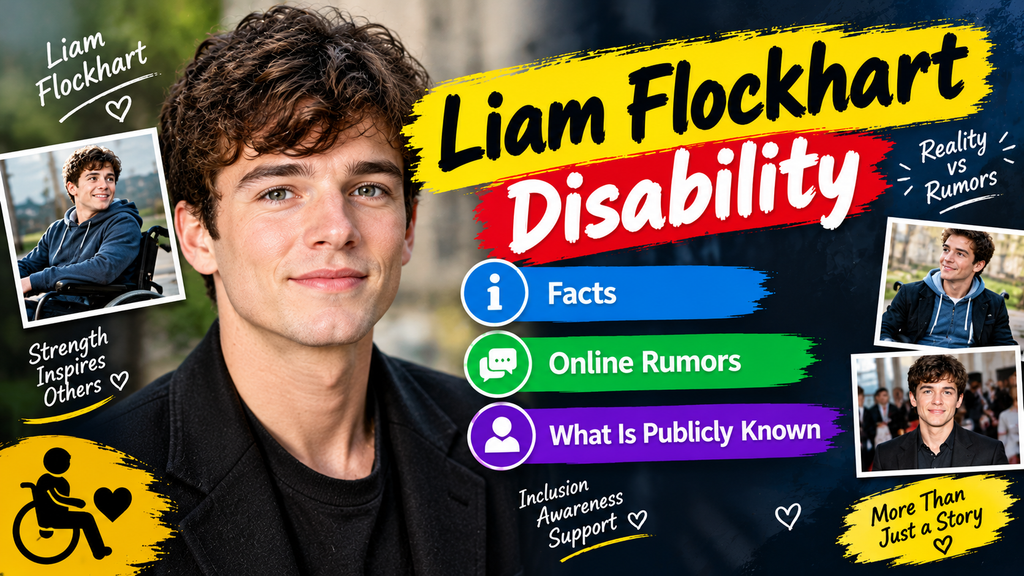
The “Liam Flockhart Disability” has attracted attention from people searching for information about Liam Flockhart, the son of actress Calista Flockhart and actor Harrison Ford. As a member of a well-known Hollywood family, Liam has occasionally attracted public curiosity about his personal life, background, education, and health.
However, when discussing a person’s disability or medical condition, it is important to distinguish verified information from online speculation. Personal health information is sensitive, and assumptions based on photographs, appearance, or social media discussions should not be treated as facts.
This article explores why people search for the term “Liam Flockhart disability,” what publicly available information establishes, and why privacy and responsible reporting matter when discussing someone’s health.
Who Is Liam Flockhart?
Liam Flockhart is known publicly as the son of Calista Flockhart, the actress recognized for her role in the television series Ally McBeal, and Harrison Ford, the internationally famous actor associated with Indiana Jones and Star Wars.
Calista Flockhart adopted Liam in 2001. Harrison Ford later adopted him after marrying Calista in 2010. Liam grew up in a family that attracted considerable media attention because of his parents’ successful entertainment careers.
Despite this connection to Hollywood, Liam has generally maintained a private lifestyle. Unlike many people associated with celebrity families, he has not consistently sought the spotlight through interviews, public appearances, or an entertainment career.
His relatively low public profile contributes to curiosity about his life. When information about a person is limited, online searches can sometimes produce rumors or unanswered questions. Nevertheless, a lack of public information does not establish anything about a person’s physical health, mental health, or disability status.
Does Liam Flockhart Have a Disability?
One of the main questions behind this keyword is whether Liam Flockhart has a disability.
There is no reliable, publicly verified information in the sources reviewed that establishes that Liam Flockhart has a disability. Similarly, the available evidence does not justify making a definitive claim about his overall health.
It is important to avoid presenting unconfirmed medical information as fact. A person’s disability status cannot be accurately determined through speculation, online discussions, or photographs.
Unless Liam or an authorized representative chooses to share relevant information publicly, it is more responsible to acknowledge that his personal medical circumstances are private.
Readers should also understand that the absence of a public statement does not prove that someone does or does not have a disability. It simply means that the information has not been reliably established in the public record.
Why Are People Searching for Liam Flockhart Disability?
There are several possible reasons why this search term appears online.
1. Public Curiosity About Celebrity Families
People frequently search for information about the relatives of famous actors. Because Harrison Ford and Calista Flockhart have prominent careers, their family members may attract attention even when they do not actively participate in public life.
Questions about family backgrounds, education, and personal experiences are common in celebrity-related searches.
2. Online Rumors and Speculation
Search engines can bring together legitimate reporting, personal opinions, unverified claims, and misleading headlines. When one website raises a question about a person’s health, other websites or social media accounts may repeat it without providing additional evidence.
Repeated claims can create the impression that information has been confirmed, even when the original source offers no reliable proof.
For this reason, readers should examine the quality of the evidence rather than judge a claim by how frequently it appears online.
3. Misinterpretation of Photographs
Photographs sometimes lead people to make assumptions about another person’s physical condition. However, appearance alone cannot establish whether someone has a disability, a medical diagnosis, or a particular health condition.
Glasses, sunglasses, posture, facial expressions, or other visible characteristics are not sufficient evidence for a medical conclusion.
Responsible reporting avoids drawing conclusions about someone’s health from isolated images.
Understanding Disability and Personal Privacy
Disability is a broad term that can include physical, sensory, intellectual, and developmental disabilities, as well as certain mental health-related conditions. Disabilities vary considerably, and individuals experience them in different ways.
Some disabilities are visible, while others are not immediately apparent. A person may also choose not to discuss a disability publicly for personal, professional, or family reasons.
Consequently, it is inappropriate to assume that a person has a disability because of appearance or to assume that someone does not have one because they appear healthy.
In Liam Flockhart’s case, the available public information does not provide a reliable basis for identifying a disability. The most accurate approach is to avoid assigning a medical label without credible evidence.
Respecting privacy is particularly important for individuals who have not chosen a public role for themselves. Being related to famous actors does not mean that every aspect of their personal lives must be available for public discussion.
Liam Flockhart’s Life Away From Hollywood
Another reason Liam Flockhart attracts interest is his relatively private lifestyle. His parents have spent decades working in film and television, but their son’s public identity is largely connected to his family background.
Information about Liam’s private activities and personal circumstances remains limited compared with the information available about his parents’ professional careers.
This distinction matters when evaluating online biographies. Some websites publish detailed accounts of celebrity relatives without clearly identifying their sources. Such articles may combine established facts with assumptions or information copied from other websites.
Readers should therefore look for reputable reporting, direct statements, and independently verifiable details before accepting claims about Liam’s life.
His decision to maintain privacy should not be interpreted as evidence of a disability or any other personal circumstance. Privacy is a personal choice, not a medical indicator.
How to Verify Claims About Liam Flockhart’s Health
Anyone researching the keyword “Liam Flockhart disability” can take several steps to evaluate the available information responsibly.
- Look for credible sources: Prioritize established news organizations, reputable publications, and direct statements from the person concerned.
- Check the original source: If an article makes a medical claim, determine whether it cites an actual interview, official statement, or reliable report.
- Avoid relying on social media rumors: Comments, anonymous posts, and short videos do not establish a medical diagnosis.
- Be cautious with misleading headlines: A headline asking whether someone has a disability does not prove that the person has one.
- Recognize the limits of public information: If trustworthy evidence is unavailable, the correct conclusion is that the matter has not been publicly verified.
These steps are useful not only for researching Liam Flockhart but also for evaluating claims about other public figures and their families.
The Importance of Responsible Disability Reporting
Disability-related reporting should focus on accuracy, dignity, and respect. Medical conditions are not entertainment, and unverified health claims can contribute to stigma or misunderstandings.
When discussing disability, writers should avoid treating a possible condition as a defining characteristic of an individual. A person’s identity includes many aspects of life, such as relationships, interests, education, work, and personal values.
It is equally important to recognize that disability is not something that should automatically be portrayed negatively. People with disabilities have varied experiences, abilities, goals, and achievements.
In celebrity reporting, the challenge is to answer genuine public questions without invading someone’s privacy or presenting speculation as news. Clear sourcing and careful wording help readers understand what is known and what remains uncertain.
For articles targeting the keyword “Liam Flockhart disability,” this distinction is especially important because the keyword itself does not establish that a disability exists.
Frequently Asked Questions
Is Liam Flockhart disabled?
No reliable public evidence reviewed for this article establishes that Liam Flockhart has a disability. His personal medical information should not be inferred from online rumors.
Is Liam Flockhart blind?
There is no reliable, publicly verified evidence establishing that Liam Flockhart is blind. Photographs or speculation about his appearance cannot confirm a visual impairment.
Have Harrison Ford or Calista Flockhart publicly confirmed a disability affecting Liam?
The sources reviewed for this article do not establish a public confirmation from either parent that Liam has a disability.
Why is Liam Flockhart’s health discussed online?
Public interest in his famous family, limited information about his private life, and the circulation of online speculation may contribute to these searches. However, search popularity is not evidence of a medical condition.
Where can readers find reliable information?
Readers should prioritize reputable news publications, credible interviews, and direct public statements. Websites that make medical claims without identifying reliable evidence should be approached cautiously.
Conclusion
The keyword “Liam Flockhart disability” reflects public curiosity about the private life of Harrison Ford and Calista Flockhart’s son. However, curiosity should not be confused with confirmation.
Based on the publicly available information reviewed for this article, there is no reliable evidence establishing that Liam Flockhart has a disability or a specific medical condition. His personal health information remains private, and unsupported claims should not be repeated as facts.
The most responsible approach is to rely on credible sources, avoid assumptions based on photographs or online rumors, and respect an individual’s right to privacy. Ultimately, accurate reporting means acknowledging the limits of available evidence rather than inventing answers to questions that have not been publicly resolved.