
Introduction
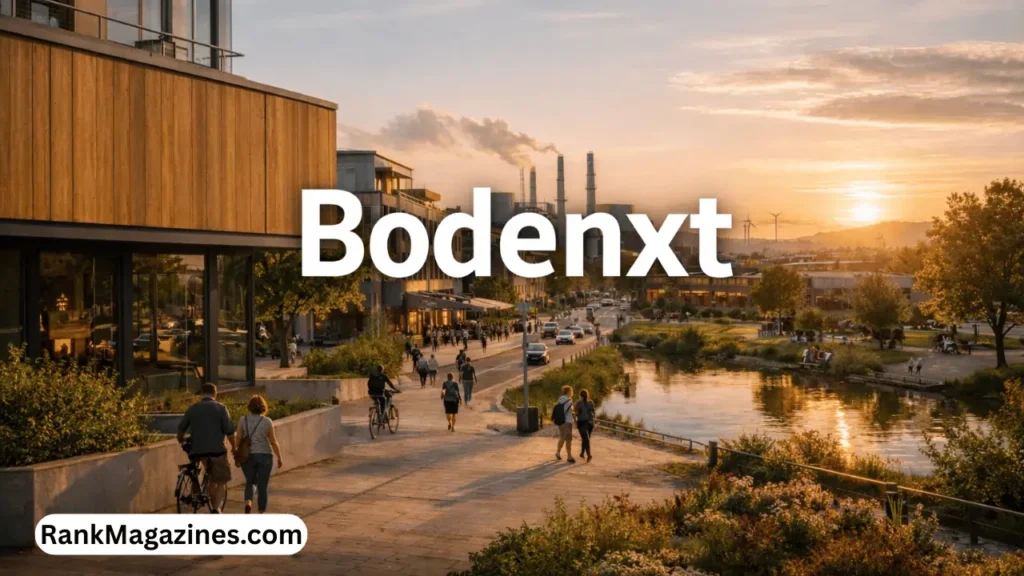
Most city development projects talk big and deliver slowly. bodenxt flips that pattern. It’s moving fast, scaling aggressively, and doing it in a way that forces other regions to rethink how growth is supposed to happen. There’s no polished narrative here—just a place committing to real change with real stakes.
A place that refused slow, incremental growth
bodenxt didn’t emerge from a need to look innovative. It came from pressure. Boden, a relatively small northern city, faced the same challenge that a lot of industrial regions face: either evolve quickly or fall behind permanently.
Instead of dragging out development across decades, bodenxt compresses that timeline. The ambition is blunt—achieve what normally takes 20 years in just a few. That changes everything. Planning becomes sharper. Execution becomes less forgiving. Mistakes carry weight.
What makes bodenxt stand out is that it isn’t trying to patch an existing system. It’s rebuilding how growth is coordinated across housing, infrastructure, workforce, and industry all at once.
Industry isn’t the side story—it’s the engine
Most urban projects treat industry as something that follows population growth. bodenxt reverses that order. Industry leads, and everything else is built around it.
The push toward green steel production is a defining move. Heavy industry has always been tied to pollution and long-term environmental cost. Here, it’s being reworked into something cleaner, more efficient, and tightly integrated with renewable energy sources.
This isn’t branding. It’s structural.
When large-scale industrial operations commit to cleaner production methods, the surrounding economy shifts with them. Jobs change. Skill demands change. Even local education systems have to adapt quickly.
bodenxt doesn’t wait for that transition to happen naturally—it forces alignment across sectors from the start.
Housing pressure isn’t ignored—it’s anticipated
Rapid growth usually breaks cities at the housing level first. Prices spike, supply lags, and planning collapses under demand.
bodenxt addresses this early. Instead of reacting to population increases, it prepares for them in advance. That means building not just more housing, but the right kind of housing—functional, accessible, and connected to where people actually work.
This is where many development strategies fail. They build units without thinking about daily life. bodenxt approaches housing as part of a system, not an isolated need.
There’s a clear understanding here: if people can’t live well, they won’t stay. And if they don’t stay, growth becomes unstable.
Workforce development isn’t optional—it’s central
A fast-growing industrial ecosystem creates a problem most regions underestimate: talent gaps.
bodenxt doesn’t assume the workforce will magically appear. It invests directly in skill development, training programs, and partnerships with education providers. The goal is to match people with opportunity in real time, not years later.
This is one of the sharper edges of the project. It acknowledges that economic growth without workforce readiness creates friction, not progress.
And there’s another layer—attracting talent from outside the region. bodenxt positions itself as a place where skilled workers can build a future, not just take a job. That distinction matters more than most planners admit.
Infrastructure that supports speed, not just scale
Infrastructure often lags behind growth. Roads, logistics systems, and public services tend to catch up after demand peaks.
bodenxt takes a different stance. Infrastructure is treated as a prerequisite, not a response.
Transport systems, energy networks, and digital connectivity are all developed with future demand in mind. This reduces bottlenecks before they happen. It also makes the region more attractive to businesses that depend on reliability.
There’s a practical mindset at work here. If companies can’t move goods efficiently or access stable energy, they don’t invest. bodenxt removes that uncertainty early.
Sustainability isn’t a marketing angle—it’s built into decisions
A lot of projects claim sustainability. bodenxt embeds it into how decisions are made.
Energy sources are selected based on long-term impact, not short-term convenience. Industrial processes are evaluated for emissions from day one. Even urban planning reflects environmental constraints instead of ignoring them.
That doesn’t mean everything is perfect. Trade-offs still exist. But bodenxt doesn’t pretend those trade-offs aren’t there. It confronts them directly and makes choices that align with its long-term direction.
This is where the project separates itself from surface-level “green” initiatives. It isn’t trying to look sustainable. It’s trying to function that way.
Economic opportunity comes with real competition
There’s no shortage of opportunity around bodenxt. New industries, supply chains, and services are forming quickly. For businesses, that creates openings.
But it’s not an easy environment.
Competition is tight. Expectations are high. Companies entering this space need to move fast and deliver value immediately. There’s little room for passive growth.
This intensity is part of what makes bodenxt work. It filters out weak participation and reinforces a culture of execution.
For entrepreneurs, that can be either a major advantage or a serious challenge.
The ecosystem approach changes how decisions get made
One of the most interesting aspects of bodenxt is how different sectors interact.
Government, private companies, and educational institutions aren’t operating in isolation. They’re aligned around shared goals, which speeds up decision-making and reduces conflict.
This doesn’t eliminate complexity. It just organizes it.
When infrastructure planning, workforce development, and industrial investment are connected, the entire system becomes more responsive. Problems are identified earlier. Solutions are implemented faster.
bodenxt shows what happens when coordination isn’t treated as an afterthought.
The pressure to deliver is constant
Ambition creates pressure. bodenxt operates under it continuously.
Timelines are tight. Investments are significant. Public expectations are high. There’s no comfortable margin for delay.
This pressure can drive performance, but it also exposes weaknesses quickly. Any gap in planning, execution, or coordination becomes visible almost immediately.
That’s part of the reality here. bodenxt isn’t a slow, controlled experiment. It’s a live, high-stakes transformation.
Not every region can replicate this model
It’s tempting to treat bodenxt as a universal blueprint. That would be a mistake.
The conditions that allow it to work—geography, political alignment, investment scale—aren’t easy to reproduce elsewhere. Trying to copy the model without those foundations would likely fail.
What can be replicated is the mindset.
The willingness to act quickly. The refusal to separate industry from sustainability. The focus on coordination instead of isolated planning.
bodenxt isn’t valuable because it can be duplicated exactly. It’s valuable because it challenges how development is usually approached.
Where bodenxt could struggle next
No project of this scale avoids friction.
Population growth can outpace planning, even with preparation. Workforce shortages can persist despite training efforts. Infrastructure can still face unexpected stress.
There’s also the question of long-term stability. Rapid growth is one thing. Maintaining it without burnout—economic or social—is another.
bodenxt will need to adapt continuously. What works now may not hold five years from now.
That’s the real test. Not the launch, but the ability to evolve without losing direction.
The real takeaway
bodenxt isn’t impressive because it sounds ambitious. It’s impressive because it commits to that ambition in practical ways that most regions avoid.
It makes decisions early. It accepts pressure. It builds systems instead of isolated solutions.
And it exposes a hard truth: slow, cautious development isn’t always safer—it’s often just less effective.
If there’s one challenge bodenxt puts forward, it’s this—how long can other cities afford to wait before rethinking how they grow?
FAQs
1. Is bodenxt mainly focused on industry or city living?
It leans heavily on industry as the starting point, but city living is built alongside it. Housing, services, and infrastructure are planned to support the workforce from the beginning.
2. Why is bodenxt attracting attention outside its region?
Because it moves faster than typical development projects and connects multiple sectors at once instead of treating them separately.
3. Can small businesses benefit from bodenxt?
Yes, especially those tied to supply chains, logistics, and local services. But they need to operate at a high standard to stay competitive.
4. What makes bodenxt different from other sustainability projects?
It doesn’t treat sustainability as an add-on. Environmental decisions are part of industrial planning and infrastructure from the start.
5. Is bodenxt a long-term stable model or a short-term surge?
It’s still evolving. The real measure will be how well it handles pressure and adapts as growth continues.
You May Also Read: Florida Woman Wins Monopoly Lottery: Million Dollar Wins, Real Payouts and Scratch Off Odds