
Introduction
Most cycling platforms try too hard to impress with flashy features and end up solving nothing real. bikesly stands out because it leans into practical use—how people actually ride, store, charge, and rely on bikes in daily life. It doesn’t pretend cycling is just a hobby. It treats it like infrastructure.
That shift matters more than any new bike design or trend.
bikesly brings structure to a fragmented cycling experience
Urban cycling has always been messy. Riders deal with inconsistent parking, unreliable security, and zero integration with digital systems. bikesly cuts into that chaos by connecting the physical and digital sides of cycling in a way that actually works on the ground.
Instead of treating bikes as standalone machines, bikesly builds around the full experience. You ride, you park, you secure, you recharge if needed—and all of it fits into a connected flow. That’s the part most platforms miss. They focus on the ride and ignore everything before and after it.
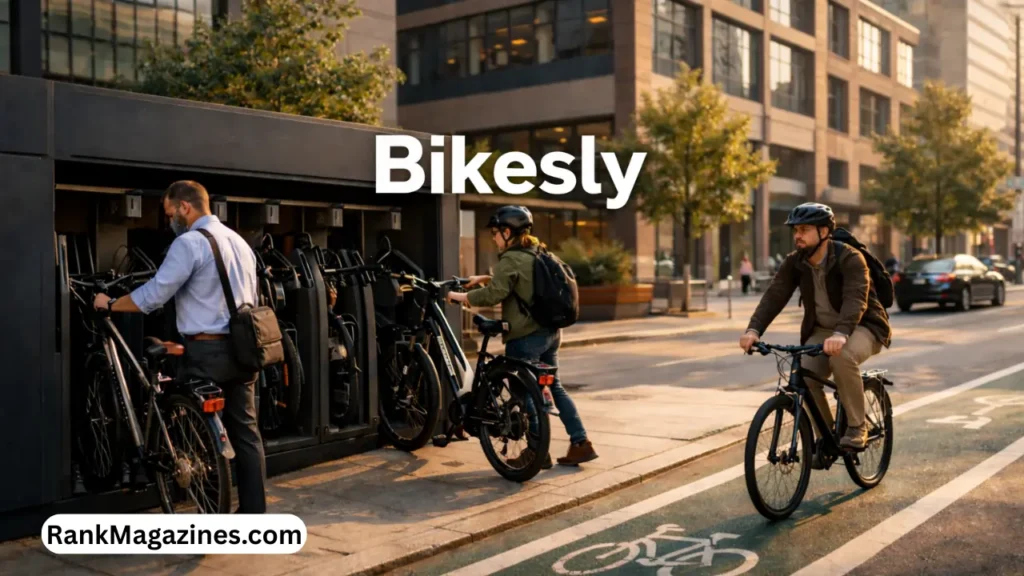
With bikesly, the focus expands. Secure parking tied to app-based access isn’t a luxury anymore—it becomes expected. Booking a space ahead of time, knowing your bike won’t be tampered with, and accessing it without friction changes how often people choose to ride.
And frequency is everything. If riding feels unreliable, people default to cars. bikesly reduces that hesitation.
Why bikesly works better in dense urban environments
Cities punish inefficiency. If something adds even five minutes of uncertainty, people abandon it. bikesly succeeds because it removes guesswork rather than adding features for the sake of it.
In crowded areas, bike theft is a real barrier. Traditional racks don’t cut it anymore. bikesly-backed systems that offer controlled access and monitored storage shift the risk calculation. Riders stop thinking “will my bike still be there?” and start thinking “this is actually viable daily transport.”
There’s also the issue of space. Cities don’t have room for sprawling parking solutions. bikesly aligns with compact, modular systems that can scale without overwhelming infrastructure. That makes it easier for property developers and municipalities to adopt without redesigning entire areas.
It’s not perfect, but it’s practical—and that’s why it sticks.
bikesly and the rise of electric bikes in everyday commuting
Electric bikes changed expectations fast. Riders now expect longer distances, less effort, and consistent performance. What they didn’t get was support infrastructure.
That gap is where bikesly quietly gains relevance.
Charging points integrated into parking systems aren’t just convenient—they remove one of the biggest mental barriers to e-bike adoption. If riders don’t have to worry about battery range during the day, they use their bikes more aggressively.
bikesly aligns with that behavior. It doesn’t treat e-bikes as an add-on; it treats them as central to modern cycling. Charging access, secure docking, and app-based tracking combine into something that feels reliable rather than experimental.
That difference decides whether someone buys an e-bike or sticks to public transport.
bikesly turns cycling into a system, not an activity
Cycling used to sit in an awkward space between recreation and transport. bikesly pushes it firmly into the transport category by building systems around it.
When everything works together—navigation, storage, access, security—you stop thinking about cycling as a separate decision. It becomes default behavior.
That’s where real change happens.
Instead of asking, “Should I take my bike today?” people start asking, “Why wouldn’t I?”
bikesly supports that shift by removing friction points one by one. It doesn’t rely on motivation or environmental guilt. It relies on convenience.
And convenience always wins.
The role of bikesly in shaping smarter mobility habits
People don’t change habits because of awareness campaigns. They change when the alternative becomes easier than the current option.
bikesly leans into that reality.
By integrating app-based controls, usage tracking, and access systems, it creates a feedback loop. Riders see patterns—how often they ride, where they park, how long they stay. That awareness, combined with ease of use, nudges behavior without forcing it.
It’s subtle, but it works.
Compare that to traditional cycling setups where everything is manual and disconnected. There’s no data, no structure, no feedback. Just a bike and a lock.
bikesly replaces that with a system that feels intentional.
bikesly is not trying to replace cars—it’s outmaneuvering them
There’s a mistake in how people frame cycling platforms. They position them as direct competitors to cars. That’s not how behavior works.
bikesly doesn’t try to win every trip. It focuses on the trips where cars are already inefficient—short distances, congested routes, inner-city movement.
By dominating those use cases, bikesly makes cars feel unnecessary in more situations. It doesn’t attack; it erodes dependence gradually.
That’s a smarter approach.
When someone realizes their daily commute is faster, cheaper, and less stressful with bikesly-supported systems, they don’t need convincing. The decision makes itself.
Where bikesly still falls short
No system gets everything right, and bikesly isn’t an exception.
Adoption depends heavily on local infrastructure. If a city doesn’t support integrated systems, the experience feels incomplete. Riders might get secure parking in one area and nothing in another. That inconsistency breaks trust.
There’s also the issue of cost. Smart systems aren’t cheap to install or maintain. Without strong backing from developers or city planners, expansion slows down.
And then there’s user behavior. Not everyone wants to rely on apps or digital access for something as simple as parking a bike. bikesly assumes a level of tech comfort that isn’t universal yet.
These aren’t dealbreakers, but they matter.
bikesly fits into a bigger shift toward controlled mobility ecosystems
The broader trend isn’t just about bikes—it’s about control. People want predictability in how they move through cities.
bikesly fits into that by offering structured access instead of open, chaotic systems. You know where your bike goes. You know how you access it. You know it’s secure.
That level of control used to belong to cars—private parking, locked garages, controlled entry. bikesly brings a version of that to cycling.
And that changes perception.
Cycling stops feeling exposed and starts feeling dependable.
bikesly is influencing how new developments are designed
Real estate developers are paying attention. Buildings that include integrated cycling systems tied to bikesly-like platforms have an edge.
Tenants care about mobility. If they can move efficiently without relying on cars, that’s a selling point.
This isn’t just about adding bike racks anymore. It’s about embedding cycling into the structure of the building—secure storage, charging stations, controlled access points.
bikesly acts as a framework for that integration. It gives developers a ready-made system instead of forcing them to improvise.
That consistency is valuable.
bikesly doesn’t need hype to keep growing
Some platforms rely on constant attention to stay relevant. bikesly doesn’t. Its growth is tied to utility, not visibility.
As cities become more congested and fuel costs stay unpredictable, cycling becomes less of a choice and more of a necessity. bikesly benefits from that shift without needing to push itself into the spotlight.
It’s not trying to be trendy. It’s trying to be useful.
And useful systems tend to stick around.
Conclusion
bikesly works because it respects how people actually move through cities. It doesn’t chase attention or overpromise innovation. It fixes the unglamorous parts of cycling—the parts that decide whether someone rides or doesn’t.
If cycling is going to compete with cars in any meaningful way, it needs systems like this behind it. Not louder campaigns. Not better slogans. Better infrastructure.
bikesly isn’t perfect, but it’s pointed in the right direction. And right now, that matters more than perfection.
FAQs
1. Can bikesly be used without an electric bike?
Yes, it works with standard bikes as well. The added benefit comes when you combine it with e-bike features like charging access, but it doesn’t depend on them.
2. Is bikesly only useful in large cities?
It performs best in dense areas, but smaller cities with growing cycling infrastructure can still benefit, especially where security and organized parking are issues.
3. Does bikesly require a mobile app for access?
In most cases, yes. The system relies on digital access for security and control, which may not appeal to everyone.
4. How does bikesly improve bike security compared to traditional locks?
It reduces exposure by placing bikes in controlled, monitored spaces instead of open racks, which lowers the risk significantly.
5. Can property developers integrate bikesly into residential projects?
Yes, and that’s already happening. It’s becoming a feature in modern developments where mobility and convenience are part of the value offered to residents.
You May Also Read: Uyç: How Skills, Careers, and Hiring Systems Work in Real Practice